October 07, 2026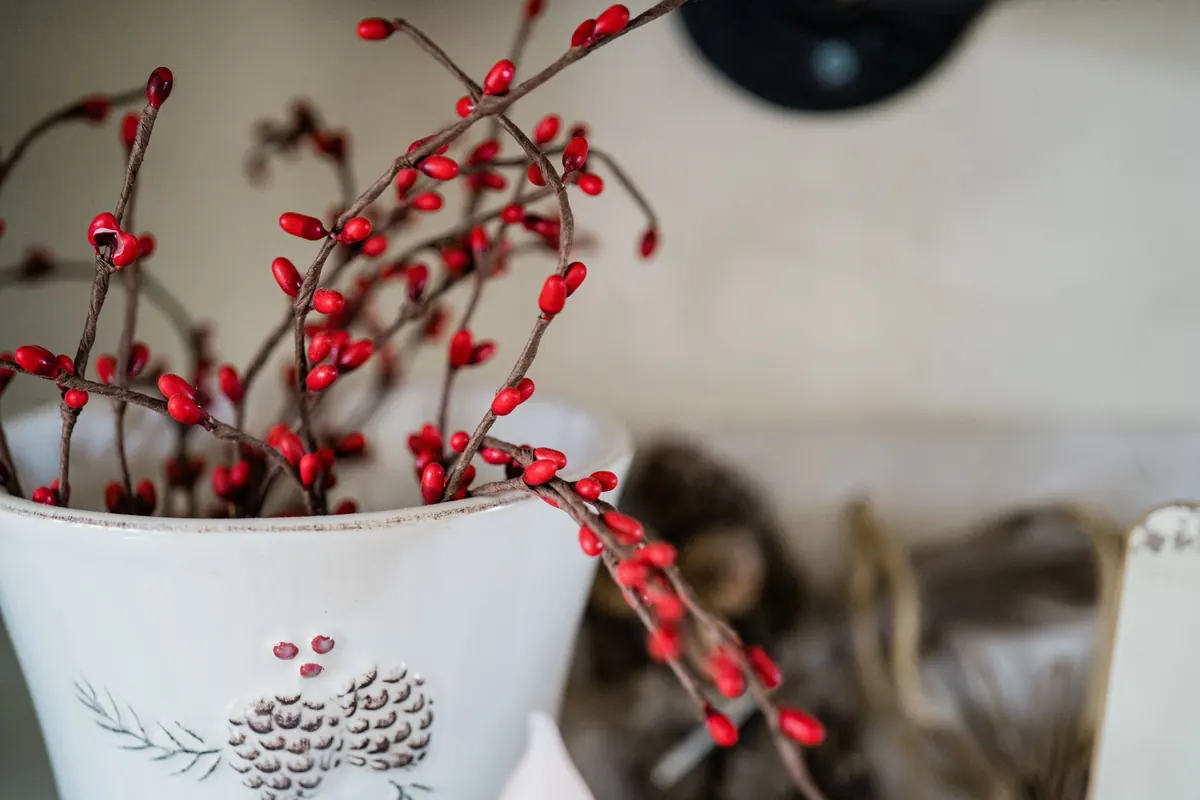
Winter botanicals are the quiet workhorses of Christmas design. They carry the season without a single bauble, and they repeat beautifully: one well-drawn sprig of hellebore can hold a greetings card, a wallpaper panel and a length of ribbon without losing its character. The trick is to build the collection around a small set of plants you can actually draw convincingly, then let colour and scale do the rest of the talking.
Begin With Plants That Are Genuinely in Season
Walk a hedgerow, a garden or a florist's bucket in December and you meet a narrower, tougher palette than autumn offers. That narrowness is useful. Fewer plants means a tighter collection, and a tighter collection is easier to sell as a range rather than a set of unrelated drawings.
- Holly — glossy, angular leaves and tight berry clusters. Vary the leaf count per sprig so the repeat doesn't look stamped.
- Ivy — best drawn as trailing vines rather than single leaves; it gives you a natural line to run along borders and edges.
- Mistletoe — pale, almost translucent berries and soft, leathery leaves. It sits happily next to darker evergreens.
- Hellebore — the Christmas rose, with nodding, sometimes freckled flowers. Draw it from slightly below to catch that downward tilt.
- Spruce, fir and pine — needles, cones and cone scales. These make your texture layer almost on their own.
- Winterberry and rowan — bare stems carrying small, bright fruit. Useful for breaking up green-on-green.
- Seedheads — teasel, honesty, allium, old man's beard. All silhouette, all winter.
- Evergreen herbs — rosemary, bay, juniper. Fine, needle-like forms that give a repeat its rhythm.
- Winter flowers — cyclamen, paperwhite narcissus, amaryllis, winter jasmine. Strong, simple shapes for hero motifs.
Sketch each from life where you can. A leaf traced from a screen tends to come out flat and symmetrical; one drawn from a sprig in your hand keeps the small awkward turns that make a finished pattern feel made by a person.
Colour Directions That Read as Winter, Not Autumn
Winter palettes go wrong when they borrow autumn's burnt orange and ochre. The season is colder and more restrained than that. Three directions, each with a different mood, will cover most of the Christmas market.
Frosted hedgerow
Chalk white, sage, eucalyptus grey-green, soft charcoal, with one deep ink note for weight. Floral, gentle and easy on gift wrap. Keep the greens desaturated so the white reads as frost rather than snow.
Candlelit
Oxblood and claret berries against deep spruce, warmed by brass, oatmeal and a little madder red. This is the traditional direction, and it works best when the reds are slightly muted rather than pure.
Midnight garden
Midnight blue and slate with silver, bone and a pale hellebore pink for the highlight. Excellent for foil stamping, dark gift boxes and anything aimed at a more contemporary buyer.
Whichever you choose, fix the palette before you draw the second motif. It is far easier to adjust one plant than to re-colour eleven of them later.
Build the Range in Four Tiers
A collection feels complete when it can be mixed without thinking. Sort your motifs into four jobs and draw at least two of each:
- Hero motifs — the three or four plants people will recognise instantly. Large, detailed, confident line work.
- Blenders — smaller stems and single leaves that fill the gaps in a repeating layout.
- Textures — cone scales, needle sprays, seedheads and berry clusters. Draw them loosely; their job is surface, not shape.
- Accents — stars, knots, simple dots or a small geometric mark that ties the range to a brand or a series.
Everything should share a line quality. If your hero is a fine ink drawing with hatching, your texture layer should not be a flat painted shape. Consistency across the tiers is what makes a range look deliberate.
Layout Ideas for Repeats, Cards and Wrap
Once the drawings are scanned or photographed, arrange them with a few dependable structures.
- Half-drop repeat — the standard for wallpaper and fabric. Alternate your hero sprig with a blender so no two rows line up.
- Garland border — one long horizontal stem with motifs branching off it. Ideal for card edges, wrapping paper trims and notebook covers.
- Spot grid — evenly spaced motifs on a plain ground. Perfect for tissue paper, ribbon and gift tags, where a busy pattern gets lost.
- Diamond trellis — a lattice with a small motif in each opening. Quietly formal, and it scales up well.
- Upright stripe — alternating sprigs, some inverted, in narrow vertical bands. Strong on textiles and box linings.
Test each layout at three scales: roughly 100 per cent for a greetings card, 40 per cent for wrapping paper and around 300 per cent for textiles or cushions. Different scales reveal different mistakes, particularly in line weight.
Check the Range Before You Commit
Print your best three layouts at finished size on the paper you intend to use. View them in greyscale as well as colour — a pattern held together only by hue will turn into mush the moment it is photocopied, printed on kraft or seen by a colour-blind customer. Look at the smallest motif and ask whether it still reads at thumbnail size on a screen.
Then run a simple tile test: place four copies side by side and check the seams. Any motif touching an edge should meet its opposite cleanly, and any accidental alignment of berries or cones across the join will look like a stripe you never intended.
Turning It All Into a Working Brief
Write the collection down before you draw, and the decisions get quicker.
- Set a plant list of six to nine species and no more.
- Lock one palette with named colours and their values.
- Assign every motif to hero, blender, texture or accent.
- Choose two repeat structures and one border.
- Decide the three scales you will deliver.
- Note the final uses — cards, wrap, textile, packaging — and check each one holds up.
Keep the brief to a single page and pin it above your desk. A seasonal range succeeds on coherence, not quantity, and a short list of plants, colours and layouts you have genuinely resolved will always outperform a folder of half-finished sprigs.