September 18, 2026
A pattern sits in your files. It's good, it might sell, and then the quiet question arrives: where did this motif come from, and who gets to say how it's used? Copyright and cultural sensitivity are two separate checks, and both belong before release rather than after a takedown notice. What follows is a working checklist — the kind you can run through with a notebook, a browser and a healthy suspicion of your own assumptions.
Copyright covers the drawing, not the idea
Strip a pattern back and you usually find something ancient: a chevron, a spiral, a four-petal flower, a run of interlace. Ideas and styles aren't owned. Copyright protects a particular expression — a specific drawing, photograph or digital file made by a specific person at a specific time. Two designers can both draw a Greek key border and neither owns the concept.
This matters because a motif can be centuries old while the version in front of you is not. A museum photograph, a 1970s wallpaper sample you scanned, a modern illustrator's tidy redraw: each carries its own rights. And copyright is not the only right in play. Trade marks protect brand identifiers, which can include distinctive patterns used to signal a business. Registered designs protect surface decoration and shapes. Heraldry is regulated in its own way. Keep those categories separate in your head, because satisfying one does nothing for the others.
Trace the source before you trace the geometry
Start with provenance, and be ruthless about it. Where did the file actually come from? A museum's open-access download, a stock library, a scanned book, a photograph of a market stall, your own sketchbook? Write down the URL, the date you accessed it, the exact licence wording, and take a screenshot of the terms page. Licences change, and your record shows what you agreed to at the time.
If you cannot name the source, you cannot license the source.
Can't find the origin? Treat that as a stop sign rather than a puzzle to solve later. Reverse image search it, search the title alongside the word "licence", and if a trail still doesn't appear, redraw from a documented source instead.
Look at the scan, not just the artwork
In the UK, a plain, faithful photograph of a two-dimensional public domain work has generally been treated as creating no new copyright. Plenty of museums and archives disagree, and their terms of use say so. Other countries take a different line, and photographs of three-dimensional objects — a ceramic, a carved panel, a textile in raking light — raise further questions. So check the institution's own terms even when the underlying work is free, and prefer collections that publish high-resolution files with a clear statement about reuse.
Public domain is a calculation, not a label
Public domain status depends on the work, the creator's death date, when it was published, and where you are. In the UK, copyright in an artistic work generally lasts for the creator's life plus seventy years, but unpublished works, anonymous works, Crown copyright and older photographs follow their own rules. The United States runs on different terms, which matters if that is where you sell. Older is usually safer, but old is not automatically free: a folk motif may belong to nobody while a chart of it in a modern reference book belongs very firmly to somebody.
Read the licence you have, not the one you assume
"Royalty-free" means you don't pay per use. It does not mean obligation-free. Before you build a product around a licensed asset, work through the following:
- Attribution: does it require a credit line, and exactly where must that appear?
- Commercial use: does the licence permit products you sell, or only personal projects?
- Editorial-only: common in stock libraries and unsuitable for merchandise of any kind.
- ShareAlike: may require your derivative to carry the same licence terms.
- NoDerivatives: rules out redrawing, recolouring or cropping into a repeat.
- Volume and platform: some licences cap print runs or exclude print-on-demand.
- Sub-licensing: can you pass rights to a manufacturer, printer or client?
Keep the invoice, the receipt and a saved copy of the terms in the same folder as the artwork. If a licence is later revoked, your earlier use is usually covered by the agreement you had — but only if you can prove what it said. For anything high-value, exclusive, or central to your brand, have a solicitor or licensing specialist read the paperwork. That is a modest cost next to a product recall.
Cultural respect is part of the brief
Copyright can be perfectly clear and the design can still be wrong to use. Some motifs work as names, prayers or marks of belonging rather than decoration. Māori koru and moko, Aboriginal Australian designs tied to Country and story, First Nations and Native American patterns, kente cloth, sacred calligraphy across several traditions: these are not free-floating ornament. Using them without permission can be disrespectful, and in some jurisdictions there are specific legal protections alongside community protocols.
Ask yourself a few direct questions:
- Is this motif used in ceremony, ritual or mourning?
- Does it identify a particular community, family, rank or lineage?
- Are the people who made it still living and working with it today?
- Would your use misrepresent its meaning, or reduce it to generic decoration?
- Could you state your source and your permission honestly if a customer asked?
Where the answer is uncomfortable, the better route is usually collaboration: commission an artist from that community, pay properly, credit clearly, and follow any published cultural protocols. Be prepared to be told no, and have a substitute ready. Collaboration tends to produce stranger, richer work than borrowing ever does.
Official marks and heraldry
Coats of arms are not simply attractive old pictures. In the UK they are granted and regulated, and using arms that belong to someone else can carry real consequences. Royal cyphers, Olympic marks and charity logos sit under their own protections too. If a design is doing the job of an emblem, assume it is spoken for and draw something else.
The pre-publication checklist
- Log the source of every motif and file, with a date and a saved copy of the terms.
- Confirm the copyright term for each source work in the countries where you sell most.
- Check whether the scan or photograph has restrictions of its own.
- Read the licence in full: attribution, commercial use, derivatives, volume, sub-licensing.
- Search trade mark and design registers for anything resembling a brand pattern or logo.
- Ask whether the motif belongs to a living culture. If so, find published protocols and named permission.
- Decide now what happens if permission is refused: substitute, commission, or drop it.
- File the paperwork per design, somewhere a colleague could find it without you.
- Re-check before each new product category — a licence for a print may not cover a mug.
- Get professional advice for anything exclusive, high-value or brand-defining.
Finishing calmly
Most of this is admin, not drama. A provenance note here, a licence screenshot there, one honest email to a cultural organisation, and the design is clear to release. The alternative — releasing first and asking questions after — costs far more, in money and in reputation.
Keep a single page of notes per design: source, licence, permission, decision. It takes twenty minutes and it answers almost any question a stockist, printer or client will ever put to you. Nothing here is legal advice, so for anything commercial, contested or close to the line, speak to a qualified professional in the relevant country. Then get back to the drawing board, with a clean conscience and a better brief.
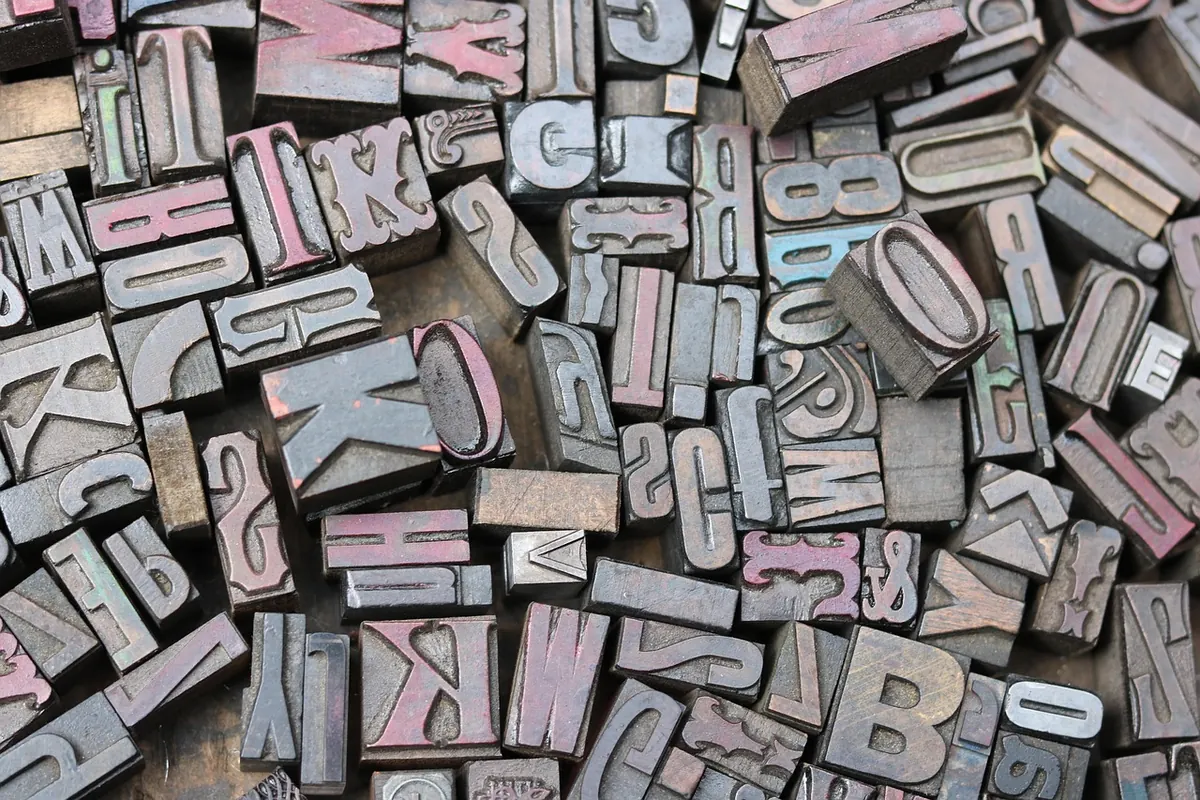
Photo: sakibmia24 / Pixabay